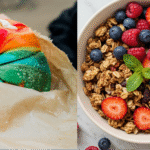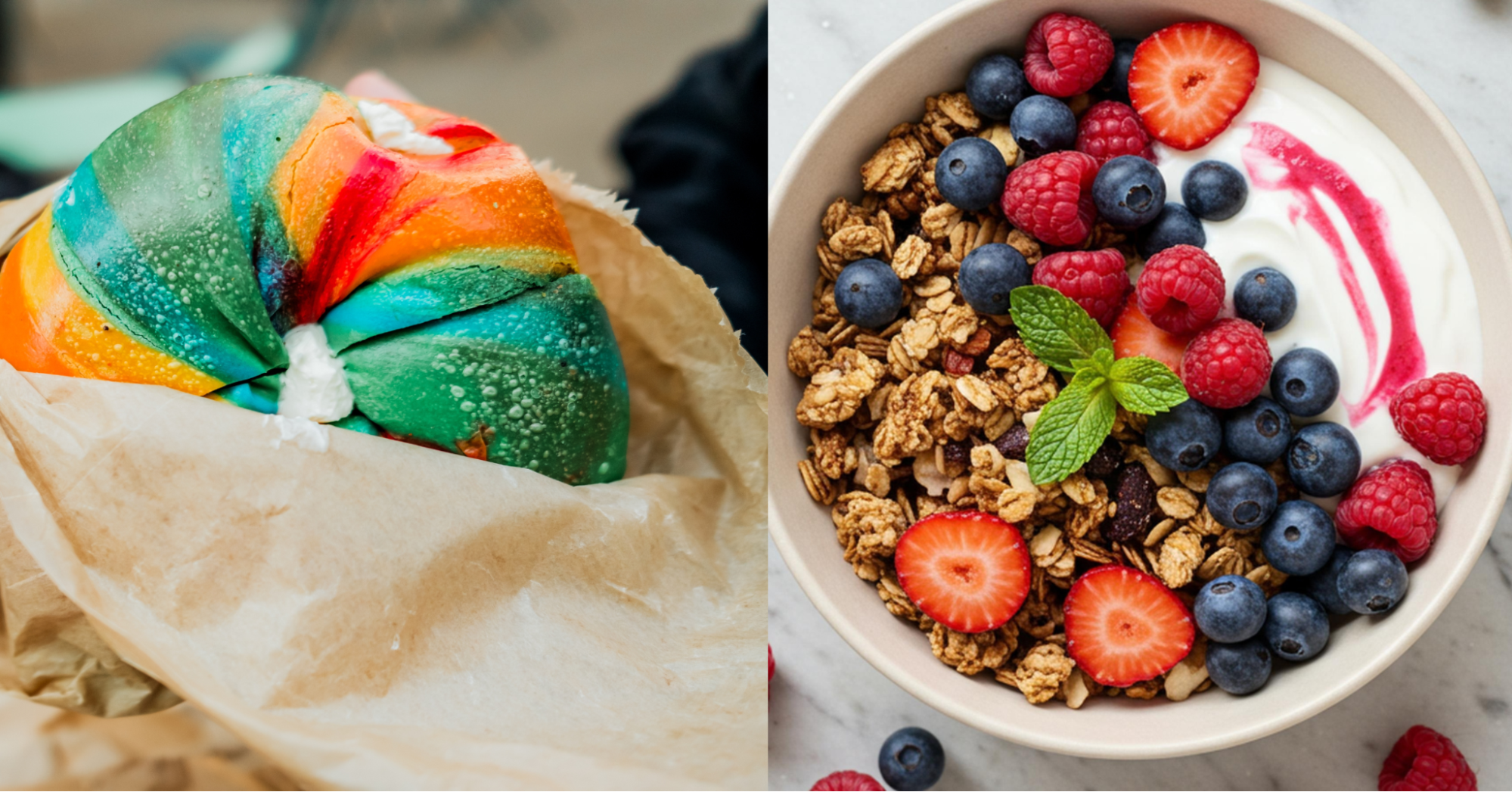
In 2016, we ate for the Instagram grid. Rainbow bagels. Unicorn lattes. “Açaí everything.” Avocado toast with toppings that looked like a tiny garden. The food was bright, playful, and made for the camera, but it also came with a side of pressure: “clean eating” labels, moralizing ingredients, and a quiet message that your plate had to be perfect to be worthy.
Now it’s 2026, and the internet is doing what it does best: bringing it all back. The nostalgia wave is real. The difference is that 2026 food trends are less about rules and more about rhythm. Less “purity,” more “pause.” It’s a slow food glow up that keeps the visual joy but drops the disordered language.1
And if you’re wondering how we know what’s “in,” it’s not just vibes. Big trend reports track what people search, save, order, and buy. The National Restaurant Association’s 2026 forecast names comfort and nostalgia as top forces shaping menus right now.1
What Food Trends Really Are (and why data matters)
A food trend is a pattern you can measure. It shows up in restaurant menus, grocery aisles, social media searches, and what people are willing to pay for.2
Trend reports come from different places:
- Grocery brands and retailers, like Whole Foods, who publish yearly trend lists (their 2016 list included plant-based foods and fermented foods, among others).
- Restaurant industry surveys, like the National Restaurant Association’s “What’s Hot” forecast, which tracks what chefs say is rising.
- Platforms like Pinterest that analyze billions of searches to predict what people will cook and crave next.
Knowing the data behind trends helps you do two things: enjoy the fun without getting played by hype, and make choices that fit your health, budget, and culture.
What We Were Obsessed With in 2016
2016 trends came in two flavors: “look at me” foods and “fix me” foods. On the “look at me” side, social media drove rainbow and unicorn foods into the mainstream.
On the “fix me” side, wellness trends surged: fermented foods, turmeric drinks, and plant-based everything. Whole Foods’ 2016 trend list called out fermented foods and plant-based products as major themes.
And yes, “healthy swaps” were everywhere. Cauliflower rice and cauliflower everything weren’t just a meme; sales and menu mentions rose sharply in that era. Time reported U.S. cauliflower sales rising from $239 million in 2012 to nearly $390 million in 2016, as low-carb swaps took off.3
The 2026 Evolution
If 2016 was “loud,” 2026 is “intentional.” Today’s trend forecasts point to comfort, nostalgia, and value as major drivers.1
We’re also seeing restaurants respond to smaller appetites and tighter budgets with smaller portions and more flexible menus, which fits the “slow food” vibe: less waste, more enjoyment, more listening to your body.
So the glow up isn’t about rejecting 2016. It’s about keeping what was joyful (color, creativity, community) and releasing what was harmful (food shame, “clean” labels, fear-based eating).1
2016 Trends, Remixed for 2026 (with quick recipe ideas)
Here’s the fun part. Same visual joy, better balance, fewer food rules. Each “remix” is designed to be easy, affordable, and realistic on a weeknight.4
1) Rainbow foods and unicorn drinks → “joy food,” not “judge food”
In 2016, the color was the point. In 2026, the color is still allowed, but the goal is pleasure plus steadier energy.4
Quick recipe idea: Rainbow yogurt “cloud” cup
Stir plain Greek yogurt with a spoonful of vanilla (or honey). Add stripes of smooth fruit: mashed banana, applesauce, blended frozen mango, and a spoon of berry jam (seedless if needed). Top with a sprinkle of crushed graham crackers for crunch.
It looks like a café parfait, but it actually keeps you full.
Cost-conscious tip: Use frozen fruit and store-brand yogurt. “Aesthetic” doesn’t need to be expensive.
2) “Clean eating” bowls → balanced bowls with actual satisfaction
The bowl era can stay. What we’re dropping is the moral language and the “no carbs allowed” panic.
Quick recipe idea: Breakfast bowl that isn’t sad
Grits or oatmeal as the base. Stir in Greek yogurt or a scoop of protein powder.
Top with sliced banana and a spoon of peanut butter. It’s cozy, filling, and doesn’t try to be “perfect.”
Cost-conscious tip: Rotisserie chicken, canned fish, and frozen vegetables are bowl MVPs when time and money are tight.
3) Cauliflower swaps → smart swaps, not mandatory swaps
The 2016 move was “replace everything.” The 2026 move is “use swaps when they help, not because you’re scared of food.”
Quick recipe idea: Cauli mac “supporting actor,” not main character
Make boxed mac and cheese. Stir in steamed cauliflower florets at the end. You keep comfort food comfort, while adding volume and nutrients without the “I replaced pasta” theater.
Cost-conscious tip: Frozen riced cauliflower is often cheapest in big bags. Use it as a booster, not a replacement, so it lasts longer.
4) Fermented everything → gut-friendly, culturally rooted ferments
Ferments aren’t new. They’ve been part of global food traditions forever. The glow up is respecting that and using them in ways that feel doable.
Quick recipe idea: Yogurt sauce that fixes everything
Mix plain yogurt + lemon + salt + garlic powder. Spoon it over chicken, roasted veggies, or even as a dip for fries. It’s fermented, high-protein, and approachable.
Cost-conscious tip: Big tubs of yogurt are usually cheaper than fancy probiotic drinks. Same “fermented” category, more versatile.
5) “Superfoods” → heritage foods and “newstalgia”
In 2016, superfoods were marketed like magic. In 2026, the smarter move is focusing on foods with cultural roots and real staying power.
Quick recipe idea: “Grandma’s greens, faster”
Sauté bagged greens with garlic and a splash of broth. Add smoked turkey (or a pinch of smoked paprika if you’re skipping meat). Let them cook down. Serve with cornbread or rice.
It’s slow-food energy without the all-day simmer.
Cost-conscious tip: Canned salmon, frozen greens, and smoked seasoning give you the “rich” flavor profile without the high price tag.
Why This Matters For Our Community
Food trends don’t land the same everywhere. Black and Brown communities have always created the culture, including food culture. But too often, the credit and profits travel elsewhere. Ingredients and dishes rooted in Black, Caribbean, African, and Latin traditions get renamed, repackaged, and sold back at a premium.5
Trends also shape access. When a food becomes “hot,” prices can rise. When neighborhoods lose grocery stores and gain “wellness cafes,” the aesthetic may go up while affordability goes down.5 That’s why “slow food” can’t just mean expensive farmers market hauls. It has to include real-life strategies: frozen produce, canned options, affordable proteins, and recipes that work for people with tight time and tight budgets.5
This is also where we drop the “clean eating” labels. Those labels often hit hardest in communities already navigating body stigma, medical bias, and unequal access to preventive care.5 You don’t need to earn food. You need nourishment, joy, and a plan that fits your life.
How to Enjoy The Visuals of 2016 Without The “Clean Eating” Trap
Here’s a simple, realistic approach that works in 2026.
Step 1: Replace “clean” with “works for me.”
“This meal helps my energy” or “This meal helps my digestion.” Drop purity language.
Step 2: Build the plate for blood sugar and satisfaction.
A good base is: protein + carb + fat + color. The color can be fun, but the stability is what helps you not crash later.
Step 3: Choose one “aesthetic” element, not ten.
One bright sauce. One fun topping. One beautiful drink. Keep it joyful, not exhausting.
Step 4: Use trend data like a compass, not a command.
Trend reports tell you what’s popular. They don’t tell you what your body needs. Comfort and nostalgia are trending right now. Value is trending too.
Let that free you: simple food is still food.
Step 5: Keep slow food realistic.
Slow food can mean: a 10-minute breakfast eaten sitting down, not standing at the sink. It can mean cooking once and eating twice. It can mean sharing a recipe in the group chat.
A Call to Action
Inside the NOWINCLUDED app, bring your favorite 2016 trend and give it a 2026 glow up.
Post a photo, share the remix, and tell us what made it feel better: more filling, more affordable, more culturally you, more peaceful.
Because the goal isn’t to eat like it’s 2016 again. It’s to keep the joy, keep the culture, keep the community, and move forward wiser.
References
- National Restaurant Association. (2025, December 1). What foods will be hot in 2026? Healthy and spicy top list. Retrieved from National Restaurant Association: https://restaurant.org/education-and-resources/resource-library/what-foods-will-be-hot-in-2026-healthy-and-spicy-top-list/
- Turansky, M. (2025, February 11). Are Food Trends a Good Thing? Retrieved from Medium: https://medium.com/@maggie_turansky/are-food-trends-a-good-thing-a30c075af52d
- Hoyle, B. (2016,, February 6). Top brassica: US gripped by cauliflower craze. Retrieved from The Times: https://www.thetimes.com/world/us-world/article/top-brassica-us-gripped-by-cauliflower-craze-3ts00psf89x?gaa_at=eafs&gaa_n=AWEtsqc4yPdg33rsYODSu-ZtnvcbPBrYV3uSftN7G567uwCp6vmVkXNC4IPqQfnPfZE%3D&gaa_ts=69b43e22&gaa_sig=0JmgQP62BDwRzWutavN6xqFkEiI-xgjDaTI5d
- Valenzuela, D. (2026, February 23). What You’ll Be Eating and Cooking This Year: Experts Predict 2026’s Hottest Food Trends. Retrieved from Katie Couric Media: https://katiecouric.com/lifestyle/2026-food-trends/
- Sevilla, N. (2021, April 2 2). Food Apartheid: Racialized Access to Healthy Affordable Food. Retrieved from NRDC: The Natural Resources Defense Council: https://www.nrdc.org/bio/nina-sevilla/food-apartheid-racialized-access-healthy-affordable-food