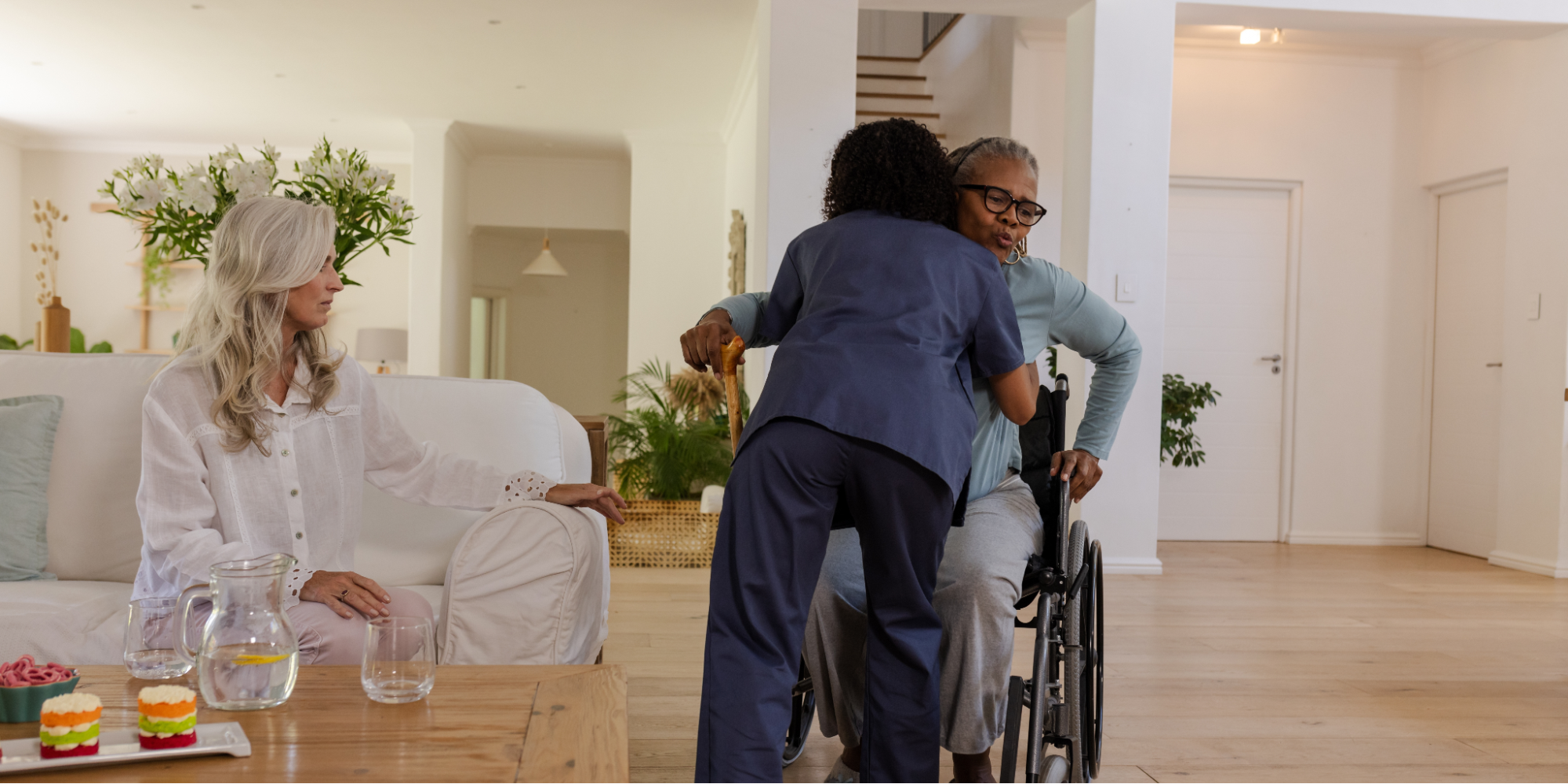
Home is often the place where a person living with Alzheimer’s feels most comfortable. But overtime, Alzheimer’s can slowly change how a person sees and moves through that home. A stove they used for decades may become confusing. A nighttime walk to the bathroom may become a fall risk. A front door may look like the way “home,” even when the person is already there. A bottle of medication may be taken twice because they forgot the first dose.
These risks are not a sign that someone has failed. They are part of how Alzheimer’s changes the brain over time, but there are home safety products out there that can help.1
For families caring for someone at home, safety does not mean taking away every piece of independence. It means adjusting the home as a person’s needs change, so familiar spaces are less likely to lead to harm.1
This guide explains why safety becomes so important when it comes to Alzheimer’s, and five types of home safety products that may help protect a loved one while supporting comfort and dignity.
What Alzheimer’s Is, In Plain Language
Alzheimer’s disease is the most common cause of dementia. Dementia is a general term for changes in memory, thinking, communication, judgment, and daily function that become serious enough to affect everyday life.1
Alzheimer’s happens when changes in the brain slowly damage brain cells.1 At first, a person may forget recent conversations, lose items, or need more help keeping track of plans. As the disease moves forward, they may struggle to recognize familiar objects, remember how to complete everyday tasks, understand where they are, or tell when something is unsafe.1
Alzheimer’s is not only memory loss. It can affect how a person:
- Uses appliances.
- Finds the bathroom or bedroom.
- Understands hot and cold temperatures.
- Maintains balance.
- Recognizes unsafe objects.
- Takes medication correctly.
- Decides whether it is safe to leave the house.
Why Home Safety Is So Important In Alzheimer’s Care
Many people living with Alzheimer’s remain at home or in a family caregiver’s home for at least part of their care journey. Home can offer comfort and routine, but the same space can hold risks that were not there before.2
As Alzheimer’s disease progresses:
- A person may forget that the stove is on.2
- They may take medication again because they do not remember taking it earlier.2
- They may wake at night, become confused in a dark hallway, and fall.2
- They may open a door and walk outside while trying to find a familiar person or place.2
Safety planning matters because Alzheimer’s changes over time. A setup that worked six months ago may no longer be enough today.
Falls are a major concern for people living with Alzheimer’s and their caregivers. More than 1 in 4 adults age 65 and older falls each year, and falling once doubles the chance of falling again.3 Each year, older-adult falls result in about 3 million emergency department visits and about 1 million hospitalizations.4
Dementia can add to fall risk because it may affect balance, vision, judgment, or the ability to notice hazards such as clutter or poor lighting. Wandering is another serious concern. The Alzheimer’s Association reports that 6 in 10 people living with dementia will wander at least once, and many wander repeatedly.5 Wandering may happen when a person is looking for home, trying to go to work, searching for a loved one, feeling restless, or simply becoming confused about where they are.5
The goal is not to make the home feel like a locked facility. The goal is to reduce avoidable risks while helping the person move through daily life as safely as possible.
Top 5 Home Safety Products For Alzheimer’s Care
These recommendations focus on types of products, not specific brands. A person’s needs may change by stage of Alzheimer’s, home layout, budget, and level of caregiver support.
1. Automatic Stove Shut-Off Devices Or Stove Knob Covers
Best For: Reducing kitchen fire and burn risk.
Cooking can be an important part of identity and independence. A person may have prepared meals for their family for most of their life. But as Alzheimer’s progresses, the kitchen can become one of the most dangerous rooms in the home.2
A loved one may turn on a burner and forget it is on. They may place something unsafe on the stove. They may no longer understand that a surface is hot. They may try to cook during the night when no one else is awake.2
The Alzheimer’s Association recommends using appliances with an automatic shut-off feature and preventing unsafe stove use by applying stove knob covers, removing stove knobs, or turning off the gas when the stove is not in use.
What To Look For:
There are several levels of stove safety support:
- Stove knob covers are clear or covered guards that make it harder to turn burners on by accident.
- Removable stove knobs can help when a stove should no longer be used without support.
- Automatic stove shut-off devices can turn off the stove after a set period of time or when unusual activity is detected.
- Induction cooktops or appliances with auto shut-off settings may lower certain risks, depending on how the person uses the kitchen.
How To Use It Safely:
If your loved one can still cook with supervision, start with small changes that protect safety without removing the activity completely. For example, a caregiver may stay nearby during cooking, store sharp tools away, and make sure smoke detectors work.
If cooking has become unsafe, stove knob covers or removing knobs may be necessary. When gas appliances are involved, ask a qualified professional about safe shut-off options.
2. Door Alarms Or Exit-Monitoring Devices
Best For: Alerting caregivers when a loved one may be leaving the home.
A person living with Alzheimer’s may leave the house for many reasons. They may believe they need to go to work. They may be looking for a relative. They may be confused about where the bathroom is. They may simply feel restless and want to walk.2
A door alarm does not physically stop someone from leaving. Instead, it lets the caregiver know that a door has opened so they can respond quickly.
What To Look For:
Options may include:
- Simple battery-powered door chimes.
- Door-opening alarms.
- Motion sensors near an exit.
- Pressure-sensitive floor mats.
- Smart door sensors that send a phone alert.
- A wearable medical ID or location-tracking device for someone with a history of wandering.
The best choice depends on whether a caregiver is in the home, whether phone alerts are useful, and how often the person attempts to leave.
How To Use It Safely:
An alarm should be part of a larger plan. Keep a recent photo of your loved one available. Make a list of familiar places they may try to visit, such as a former job, church, previous home, or favorite store. Let trusted neighbors know whom to call if they see your loved one outside alone.2
It is important not to lock a person inside the home in a way that creates danger during an emergency.
If a loved one with dementia goes missing, begin looking immediately. If they are not found within 15 minutes, call 911 and tell responders that the person has dementia.
3. Locked Medication Storage or a Supervised Pill Organizer
Best For: Preventing missed doses, double dosing, or accidental medication use.
Many older adults take more than one medication each day. A person living with Alzheimer’s may forget whether they already took a pill, take the wrong medication, or mistake pills for something else.2
This can become dangerous quickly, especially with medications for blood pressure, diabetes, pain, sleep, blood thinning, or anxiety.
What To Look For
Helpful options may include:
- A basic lockbox or locking cabinet for all medications.
- A weekly pill organizer that a caregiver fills and checks.
- A locked automatic pill dispenser that releases only the scheduled dose.
- A medication list kept in a clear, easy-to-find place for caregivers and emergencies.
How To Use It Safely:
A pill organizer should not be left open and accessible if the person might take more than one dose. One caregiver or trusted family member should be responsible for filling the organizer and tracking whether doses were taken.2
Keep over-the-counter pain medicines, sleep aids, vitamins, supplements, and prescription medications secured. A person living with dementia may not understand that taking extra medication is harmful.
4. Motion-Sensor Night Lights And Improved Home Lighting
Best For: Reducing confusion and fall risk during nighttime movement.
A dark hallway can be difficult for anyone to navigate at night. For a person living with Alzheimer’s, shadows, poor contrast, and changes in light can be even more confusing. They may misjudge where a doorway begins, struggle to find the bathroom, or become frightened by dark spaces.2
What To Look For
Useful lighting products may include:
- Plug-in motion-sensor night lights.
- Battery-powered lights for hallways or areas without outlets.
- Bedside touch lamps.
- Lights near stairs and exterior entries.
- Bright, easy-to-find bathroom lighting.
Motion-sensor lights can be especially helpful because the person does not have to remember where the switch is or how to use it.
How To Use It Safely:
Place lights along the path between the bed and bathroom. Light stairs at both the top and bottom. Avoid strong glare or flashing lights, which may increase confusion. Remove clutter, cords, and loose rugs from the same pathways so lighting is paired with safer movement.2
5. Bathroom Safety Products: Grab Bars, Non-Slip Surfaces, And Shower Seating
Best For: Lowering the risk of falls during bathing and toileting.
Bathrooms can be high-risk spaces because floors get wet, surfaces are hard, and people often need to step, turn, sit, or stand in tight areas.2
A person living with Alzheimer’s may also have difficulty judging water temperature, remembering where to hold on, or understanding how to move safely in the tub or shower.
What To Look For
Bathroom safety products may include:
- Grab bars installed in or near the shower and next to the toilet.
- Non-slip adhesive strips or a secure non-slip shower surface.
- A sturdy shower chair.
- A raised toilet seat with arm supports, if needed.
- An anti-scald device or water temperature control, since Alzheimer’s can affect the ability to judge hot and cold temperatures.
How To Use It Safely:
Grab bars should be securely installed into the wall, not attached with weak suction that may release when weight is placed on it. Remove loose bath rugs that can slide or bunch underfoot. Keep commonly used items within reach so the person does not need to climb, stretch, or bend too far.2
Depending on the stage of Alzheimer’s, a caregiver may also need to remain nearby during bathing to support safety while still preserving privacy and dignity.
Alzheimer’s Home Safety Risk Assessment Table
|
Common Safety Risks
|
Practical Environmental Engineering
|
Recommended Safety Product
|
|---|---|---|
|
Kitchen Burns & Fires |
Prevent unmonitored burner usage without stripping away culinary identity. |
Stove knob covers or automatic power-off switches. |
|
Elopement & Wandering |
Alert households when exterior exit doors are opened at unusual hours. |
Wireless door chimes or pressure-sensitive floor mats. |
|
Medication Overdose |
Centralize and lock away prescription schedules to prevent double-dosing. |
Locked automatic pill dispenser or secure medical lockbox. |
|
Nighttime Falls |
Illuminate the direct pathway between the mattress and the bathroom. |
Motion-sensor plug-in LED nightlights. |
|
Bathroom Slipping |
Provide concrete structural stability on slick tiles and wet porcelain surfaces. |
Wall-anchored grab bars and heavy-duty shower seating. |
When To Recheck The Home Safety Plan
A loved one’s safety needs may change over time. Recheck the home after a fall, a near fall, a wandering event, a medication error, a hospital visit, a new diagnosis, or a clear change in memory or behavior.
It may also help to revisit safety every few months, even if nothing urgent has happened. Ask:
- Has anything become harder for my loved one to use?
- Are there new signs of confusion or restlessness?
- Are they waking more often at night?
- Have they tried to cook, drive, or leave the home unsafely?
- Is the current plan placing too much pressure on the caregiver?
The home should continue to feel familiar and welcoming. Safety changes should be made with dignity, not punishment.
Frequently Asked Questions About Home Safety Products
Q: Can I use smart home tech instead of specialized dementia safety products?
A: Yes. Many families successfully use mainstream smart home technology. Smart door sensors can text your phone when a door opens, smart plugs can let you turn off small appliances remotely, and motion-activated smart bulbs can light up dark hallways automatically. These are great, budget-friendly options if you already use smart home devices.
Q: My loved one gets angry or upset when I try to install safety items. What should I do? A: Try making changes quietly or introducing them as a “home upgrade” rather than a safety restriction. For example, replace standard stove knobs with a lock when they are asleep or out of the house. If they notice a change, frame it around saving money, a new policy, or a maintenance requirement rather than their memory or diagnosis.
Q: Does health insurance or Medicare help pay for home safety items?
A: Generally, standard Medicare does not pay for safety products like night lights, door alarms, or non-permanent grab bars. However, if an Occupational Therapist (OT) conducts a home safety evaluation, they can write a prescription for specific “Durable Medical Equipment” (DME), which may qualify for partial coverage. Additionally, some Medicare Advantage plans or Medicaid waiver programs offer supplemental benefits that help cover the costs of home modifications.
Q: How do I know when it is no longer safe for my loved one to stay in their home?
A: It is time to re-evaluate their living situation if unsafe events happen repeatedly despite using home safety products. Key warning signs include a history of multiple falls, wandering outside completely unnoticed, leaving burners on frequently, or if the constant surveillance is severely impacting the caregiver’s physical and mental health.
Hear About Alzheimer’s Home Safety Products From The NOWINCLUDED Community
Caring for a loved one living with Alzheimer’s often means seeing risks they cannot fully recognize for themselves.
These moments can be frightening, but they can also be signals. They tell families where support and safety changes are needed most. Inside the NOWINCLUDED app, you can find trusted, culturally aware health education to help families navigate Alzheimer’s, caregiving, home safety, and the daily decisions that shape quality of life.
Use this guide to walk through your loved one’s home, choose the most urgent safety change, and remember that protecting someone’s dignity and protecting their safety can happen together.
References
- The Alzheimer’s Association. (2026). 2026 Alzheimer’s disease facts and figures. Alzheimer’s & Dementia Journal (A&D). doi:10.1002/alz.71345
- NIH. (2024, August 2). Alzheimer’s Caregiving: Home Safety Tips. Retrieved from NIH: National Institute on Aging: https://www.nia.nih.gov/health/safety/alzheimers-caregiving-home-safety-tips
- CDC. (2026, February 26). Older Adult Falls Data. Retrieved from Centers for Disease Control and Prevention: https://www.cdc.gov/falls/data-research/index.html
- CDC. (2026, January 27). Facts About Falls. Retrieved from Centers for Disease Control and Prevention: https://www.cdc.gov/falls/data-research/facts-stats/index.html
- Alzheimer’s Association. (2025). Wandering. Retrieved from Alzheimer’s Association: https://www.alz.org/help-support/caregiving/stages-behaviors/wandering