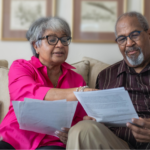
When Janiqua decided to share her health story with the NOWINCLUDED community, she wasn’t just looking for attention — she was searching for belonging. “I wanted to be heard and seen by people who look like me”, she said softly. “Because sometimes, it feels like no one’s really listening”.
At 53 years old, Janiqua has survived what few could imagine: three open-heart surgeries for a condition called aortic stenosis, which is a narrowing of the aortic valve that makes it harder for the heart to pump blood to the rest of the body.1 It’s a condition that, when left untreated, can lead to heart failure, fainting, chest pain, and even death.1
But even after going through multiple surgeries, Janiqua’s story is about more than medicine. It’s about the fight to be heard in a healthcare system that too often silences Black women’s pain.
Understanding Aortic Stenosis
The aortic valve is one of the heart’s four valves and it controls blood flow from the heart to the body.1 When that valve narrows, the heart has to work overtime, causing fatigue, dizziness, shortness of breath, and chest tightness.1
Aortic stenosis can be caused by age-related wear, calcium buildup, or congenital defects, and in some cases, it runs in families. For Black and Brown communities, it’s an often-overlooked condition — one that can go undiagnosed or misdiagnosed due to structural racism, unequal access to cardiology care, and delays in referrals to specialists.2
In fact, studies show that Black people are significantly less likely to receive timely valve replacement surgeries than white people, even when they present with similar symptoms and condition severity.2
When the Heart Doesn’t Heal the First Time
After her first surgery, Janiqua thought the worst was behind her. “No one ever told me it could come back”, she said. “I had no idea I’d be facing this again 10 years later”.
Aortic stenosis can recur, especially in people with valve replacements that begin to narrow or leak over time.3 The heart, though resilient, can’t always adapt to the long-term strain.3 For Janiqua, this meant enduring another major surgery — and then another.
Eventually, doctors implanted a mechanical valve, designed to last a lifetime but requiring lifelong use of blood thinners to prevent clots. “I didn’t want to be on medication for the rest of my life”, she admitted. “But I didn’t have a choice.”
Her story reflects a painful truth: medical decisions are rarely black and white, and for many in our communities, they’re made in the context of limited information, mistrust, and a system that hasn’t earned our confidence.
The Pain of Not Being Heard
As she continued her health journey, new symptoms began to appear, including fatigue, discomfort, and unexplained pain. But each time she sought help, her concerns were dismissed. “Why do I feel the way I feel”? she asked. “If I can be around people who are like me, maybe they’ll take more interest in what’s going on with me”.
In her video, her voice trembles and her eyes fill with tears. “Sometimes I question myself. Am I making this up, or is this real”? she says, wiping her face. “But I know how I feel. I know my body. And if my body is telling me something’s wrong, somebody please help me find out what’s wrong.”
Sadly, this experience is all too common. Black women are less likely to have their pain believed, less likely to be referred for advanced tests, and more likely to be labeled as anxious or exaggerating their symptoms.4 This lack of trust and empathy isn’t just frustrating, it’s dangerous. Research shows that Black women are more likely to die from heart-related complications than any other group of women in America.5
Holding Onto Faith
Through it all, Janiqua’s faith has been her anchor. “I know that I serve an awesome God,” she said, her voice growing stronger. “And as long as I’m still standing here, my testimony has to be heard. It has to be told. I’m going to keep telling my testimony”.
Her words echo a powerful truth: that healing isn’t always about a cure. Sometimes, it’s about community. About the courage to keep speaking even when the world doesn’t listen.
A Call to Our Sisters
To every Black woman reading this: you are not imagining it. You deserve to be heard, to be believed, and to receive care that honors both your voice and your body.
If something feels off, don’t stop asking questions. Bring someone with you to your appointments. Take notes. Seek second opinions. Your persistence could save your life.
And this Thankful November, we pause to thank Janiqua for her courage, her faith, and her willingness to speak her truth. Her story reminds us that even when the system falls short, our voices can still break through.
References
- Lee, A. R. (2023, September 25). Aortic Stenosis: Effects of Heart Valve Narrowing. Retrieved from VeryWell Health: https://www.verywellhealth.com/aortic-stenosis-7965999?utm_campaign=22403052610-185896922828&utm_source=googleawpaid&utm_medium=paid&utm_content=743389368139&utm_term=g-heart%20stenosis%20meaning&gad_source=1&gad_campaignid=22403052610&gbraid=0AAAAAoV7btc
- Parikh, P. B., & Kort, S. (2022). Racial and Ethnic Disparities in Aortic Stenosis. Journal of the American Heart Association. doi:10.1161/JAHA.122.028131
- GRIMARD, B. H., SAFFORD, R. E., & BURNS, E. L. (2016). Aortic Stenosis: Diagnosis and Treatment. Retrieved from American Family Physician: https://www.aafp.org/pubs/afp/issues/2016/0301/p371.html
- Schumacher, S., Hill, L., Artiga, S., Hamel, L., & Valdes, I. (2024, May 7). Five Facts About Black Women’s Experiences in Health Care. Retrieved from KFF: https://www.kff.org/racial-equity-and-health-policy/five-facts-about-black-womens-experiences-in-health-care/
- AHA. (2025, February 13). Heart Disease and Stroke in Black Women. Retrieved from American Heart Association : https://www.goredforwomen.org/en/about-heart-disease-in-women/facts/heart-disease-in-black-women