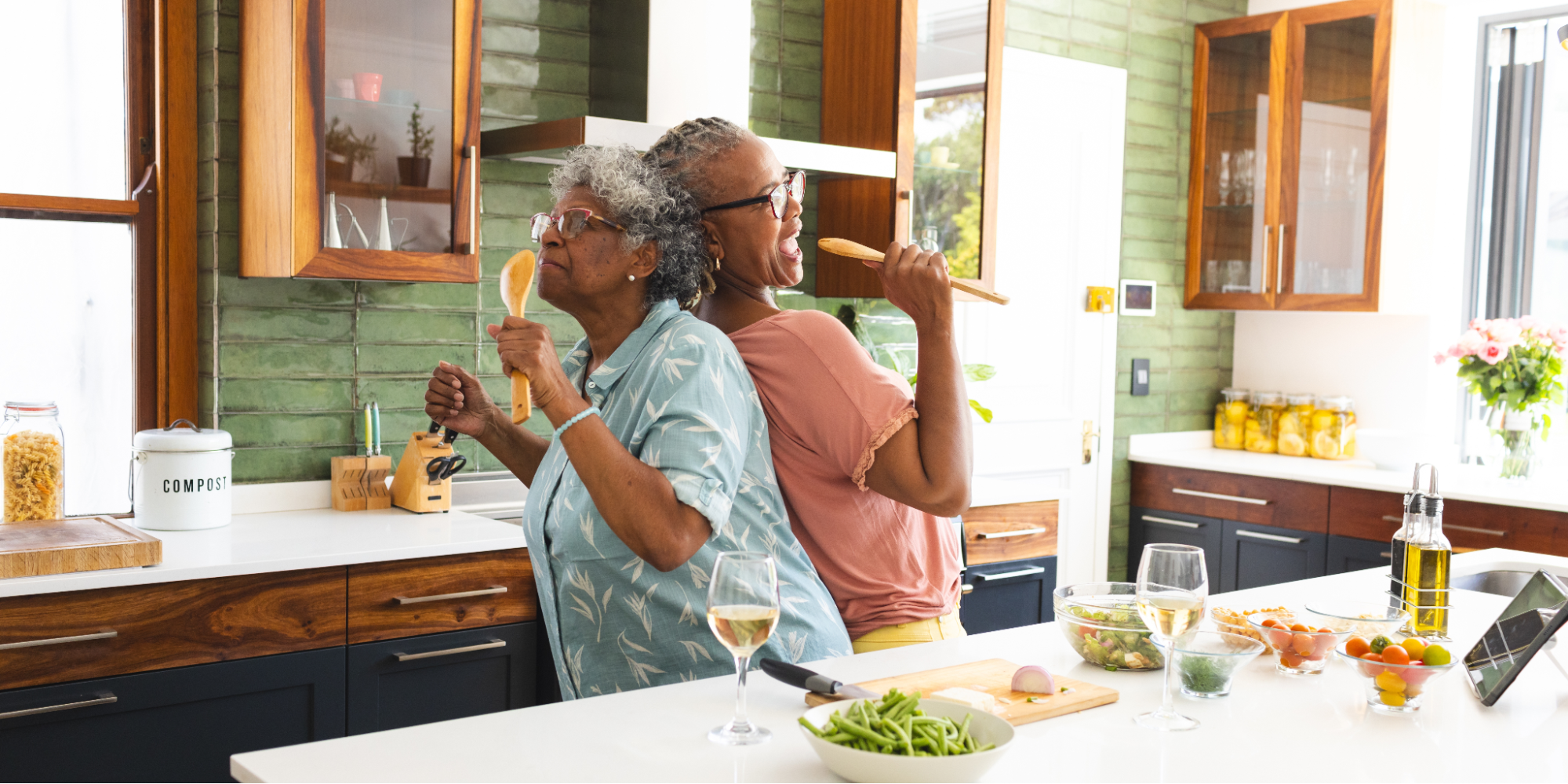
You know the smell before you see the pot. Greens simmering low and slow. Onions softening in hot oil. Cornmeal dusted across a counter that’s seen generations of hands. A Southern kitchen announces itself long before dinner is served. It is warmth, memory, and muscle memory all at once. Soul food was never just about flavor. It was born out of survival.
Enslaved Africans took what was left behind — leafy greens, beans, corn, root vegetables, scraps — and turned them into nourishment. These Southern recipes sustained bodies through forced labor and sustained spirits through unimaginable loss.1 Over time, the same foods evolved into celebration: church dinners, holidays, reunions, and the sacred act of gathering.
But history also shaped how these foods changed. As access shifted, processed meats, refined oils, and excess salt found their way into everyday cooking. What once protected survival began, quietly, to strain the heart.1
As we observe Black History Month, this matters. Heart disease remains a leading cause of death in Black communities, and high cholesterol is a major contributor.2 This is not about blame or abandoning tradition. It’s about intention.
Honoring our roots does not mean ignoring what our bodies need now. It means evolving with care, so we’re here to pass these traditions forward.
What Cholesterol Is and Why It Matters
Cholesterol is a waxy substance found in every cell of the body. It plays an essential role in building cell membranes, producing hormones, and supporting digestion. The liver produces all the cholesterol the body needs.3
Problems arise when cholesterol becomes unbalanced. Low-density lipoprotein (LDL), often called “bad cholesterol,” can build up in blood vessels, forming plaque that narrows arteries and restricts blood flow.3 High-density lipoprotein (HDL), or “good cholesterol,” helps remove excess cholesterol from circulation.3
When LDL remains elevated over time, the risk of heart attack, stroke, and heart failure increases. Because high cholesterol causes no immediate symptoms, it often goes undetected until serious damage has already occurred.3
The Top 3 Conditions High Cholesterol Impacts
- Heart attacks and coronary artery disease When plaque builds up in the arteries that supply blood to the heart, the heart muscle can become starved of oxygen.4 This can cause chest pain (angina) or lead to a heart attack if a plaque ruptures and blocks blood flow.4
- Stroke The same plaque process can happen in the arteries that supply blood to the brain. Reduced blood flow or a sudden blockage can cause a stroke, which can change a person’s life in minutes.4
- Peripheral artery disease (PAD) Cholesterol buildup can also narrow blood vessels that supply the legs and feet. This can cause leg pain with walking, slow healing of wounds, and in severe cases, increase the risk of infection and amputation.4
The takeaway is simple: cholesterol is not a “one-organ” issue. It’s a whole-body risk factor.
Five Southern Recipes That Lower Cholesterol
Each recipe below is designed to be flavorful, culturally familiar, and practical. You can cook these meals as written and still feel like you’re eating real Southern food.
1) Slow-Simmered Collard Greens with Smoked Turkey
Historical note: Greens have deep roots in West African culinary traditions and became staples in the South because they were affordable, nutrient-dense, and filling.1
What you’ll need (serves 4–6):
- Collard greens (1–2 bunches)
- Smoked turkey leg or wing
- 1 onion
- 3 cloves garlic
- 1–2 tbsp olive oil
- 3 cups low-sodium broth or water
- 1–2 tbsp apple cider vinegar, black pepper, optional crushed red pepper.
Step-by-step:
- Start by washing the greens well, removing thick stems, and slicing into ribbons.
- In a large pot, warm olive oil and sauté chopped onion until soft and fragrant.
- Add garlic and cook for another minute. Place smoked turkey in the pot and pour in broth or water. Bring to a simmer, then add the greens in batches until wilted.
- Cover and simmer 45–60 minutes, stirring occasionally, until tender. Finish with vinegar, black pepper, and optional red pepper flakes.
Why it helps: Greens bring soluble fiber that helps pull cholesterol out through digestion, while swapping pork for smoked turkey reduces saturated fat.
Cost-efficient note: Buy greens in season or frozen bags. Frozen collards are usually cheaper, last longer, and still provide fiber.
2) Black-Eyed Pea and Vegetable Stew
Historical note: Black-eyed peas trace to West Africa and became a powerful symbol in Southern Black culture, tied to resilience and tradition.1
What you’ll need (serves 6):
- Black-eyed peas (1 lb dried or 3 cans low-sodium)
- 1 onion
- 2 celery stalks
- 1 bell pepper
- 3 cloves garlic
- 1 can diced tomatoes
- 4 cups broth/water
- Thyme
- Paprika
- Bay leaf
- Black pepper
- Optional hot sauce.
Step-by-step:
- If using dried peas, rinse and soak overnight or use a quick soak method.
- In a pot, sauté onion, celery, and bell pepper in a little olive oil until soft. Add garlic, then stir in tomatoes and seasonings.
- Add peas and broth, bring to a boil, then simmer until peas are tender (about 45–60 minutes for dried, 15–20 minutes for canned). Taste and adjust seasoning. Serve as-is or over brown rice.
Why it helps: Legumes are one of the most reliable cholesterol-lowering foods because of their soluble fiber and plant protein.
Cost-efficient note: Dried peas are one of the cheapest heart-healthy staples per serving. Keep them in the pantry for months.
3) Oven-Baked “Fried” Catfish with Cornmeal Crust
Historical note: Catfish became a staple because it was accessible and abundant in Southern waterways, often feeding families through hard times.1
What you’ll need (serves 4):
- Catfish fillets
- Cornmeal
- Paprika
- Garlic powder
- Black pepper
- Optional cayenne
- 1 egg or buttermilk (small amount)
- Olive oil spray or a light brush of oil
- Lemon.
Step-by-step:
- Preheat oven to 425°F. Pat fish dry. In a bowl, mix cornmeal with spices.
- Dip fillets lightly in egg or buttermilk, then coat with seasoned cornmeal. Place on a lined baking sheet and lightly spray or brush with oil.
- Bake 12–15 minutes, flipping once, until crisp and cooked through. Finish with lemon.
Why it helps: You keep the tradition and crunch without deep frying, which lowers saturated fat intake.
Cost-efficient note: Look for frozen catfish fillets when fresh prices are high. Frozen fish can be equally nutritious and often cheaper.
4) Sweet Potato and Okra Skillet
Historical note: Both okra and sweet potatoes have strong African roots and were widely cultivated in the South as sustaining, nutrient-rich foods.1
What you’ll need (serves 4):
- 2 sweet potatoes
- 2 cups okra (fresh or frozen)
- 1 onion
- Garlic
- Olive oil
- Smoked paprika or seasoning blend
- Black pepper
- Optional tomatoes.
Step-by-step:
- Dice sweet potatoes into small cubes for faster cooking.
- In a skillet, sauté onion in olive oil until soft. Add sweet potatoes, a splash of water, and cover for 8–10 minutes to steam.
- Add okra and seasonings, stirring occasionally until okra is tender and sweet potatoes are fully cooked. Add tomatoes at the end if you want more of a stew-like texture.
Why it helps: The fiber in sweet potatoes and okra supports cholesterol control and helps reduce inflammation.
Cost-efficient note: Frozen okra is often cheaper, lasts longer, and works perfectly in skillets and soups.
5) Red Beans and Brown Rice
Historical note: This dish reflects the deep blend of African, Creole, and Caribbean influence in Southern food traditions, especially in Louisiana.1
What you’ll need (serves 6):
- Red beans (dried or canned)
- 1 onion
- Celery
- Bell pepper
- Garlic
- Broth
- Bay leaf
- Thyme
- Paprika
- Black pepper
- Brown rice
Step-by-step:
- Sauté onion, celery, and bell pepper until soft. Add garlic and spices, then stir in beans and broth.
- Simmer until thick and flavorful. If using dried beans, this may take 60–90 minutes (or faster in a pressure cooker). Serve over cooked brown rice.
Why it helps: Beans lower LDL cholesterol through soluble fiber, and brown rice provides whole-grain support for heart health.
Cost-efficient note: Cook a big pot and freeze portions. Beans taste better the next day, and leftovers prevent expensive last-minute meals.
A Black History Month Call to Action
This Black History Month, honoring our ancestors means more than remembrance. It means committing to longevity.
In the NOWINCLUDED app, share which Southern dish you’re reclaiming with heart health in mind. What recipes are you evolving so you can pass them down — not just in memory, but in practice?
Our culture deserves preservation. Our people deserve survival.
References
- Ford, A. (2022, December 1). Food from the soul: A history of African American culture and nutrition. Retrieved from The DO: https://thedo.osteopathic.org/columns/food-from-the-soul-a-history-of-african-american-culture-and-nutrition/
- Vyas, A., Desai, R., Went, T. R., Wiltshire, D., & Priyadarshni, S. (2023). Cardiovascular Disease Burden and Major Adverse Cardiac Events in Young Black Patients: A National Analysis of 2 Cohorts 10 Years Apart (2017 Versus 2007). Journal of the American Heart Association. doi:https://doi.org/10.1161/JAHA.123.029895
- AHA. (2024, February 16). What Is Cholesterol? Retrieved from American Heart Association: https://www.heart.org/en/health-topics/cholesterol/about-cholesterol
- Jung, E., Kong, S. Y., Ro, Y. S., Ryu, H. H., & Shin, S. D. (2022). Serum Cholesterol Levels and Risk of Cardiovascular Death: A Systematic Review and a Dose-Response Meta-Analysis of Prospective Cohort Studies. International Journal of Environmental Research and Public Health. doi:10.3390/ijerph19148272
- Werner, C. (2023, February 1). African Americans, Cholesterol, and the Risk of Heart Disease. Retrieved from Healthline: https://www.healthline.com/health/high-cholesterol/cholesterol-heart-disease-and-african-americans