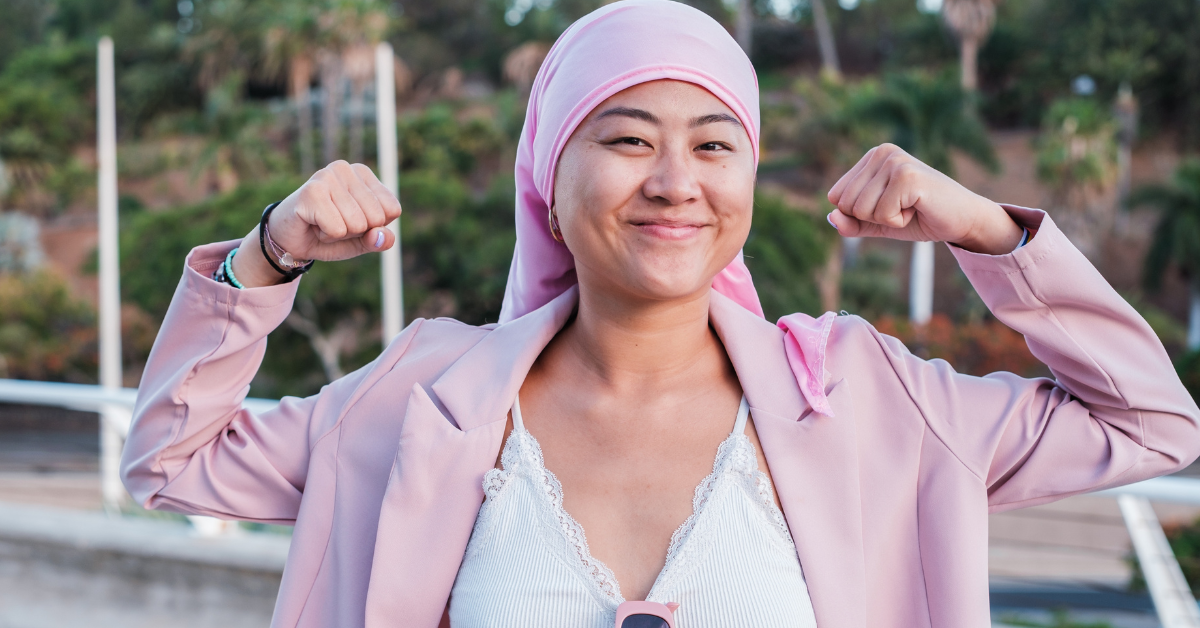
The moment a person hears “You have breast cancer,” her life is divided into a before and an after. Suddenly, your days are filled with appointments, new vocabulary, treatment decisions, and an emotional weight that doesn’t let up — even on the good days.
Breast cancer doesn’t just affect the body. It reaches into a person’s identity, relationships, mental health, and the simple routines that you once took for granted. And yet, somewhere inside that storm, thrivers are expected to “stay strong.” To smile. To carry the load. To show up for others.
This guide exists to say: you deserve care, too. Not as an afterthought, but as a vital part of your healing.
What is Breast Cancer?
Breast cancer begins when certain cells in the breast start to grow and divide more quickly than they should. Over time, these cells can form a lump or mass, or spread into nearby tissues and lymph nodes.1
While some types of breast cancer grow slowly, others are more aggressive and demand immediate attention.1 Treatment varies depending on the stage and subtype, but often includes some combination of surgery, chemotherapy, radiation, hormonal therapy, or targeted medications.2 These treatments work by slowing or stopping the cancer’s growth, protecting other organs, and reducing the chance of recurrence.2
But treatment also places a significant strain on the body: it can alter appetite and digestion, change skin and hair, shift hormone levels, and bring on deep fatigue.2 Understanding what breast cancer is and how treatment affects every part of the body is an important first step toward practicing meaningful self-care throughout the journey.
The Emotional and Mental Toll
Breast cancer treatment reaches far beyond the physical body. It touches a woman’s identity, confidence, relationships, and sense of safety.3 Many women describe feeling like their emotional landscape becomes unpredictable: courage one minute, fear the next; hope mixed with exhaustion; pride in fighting, but grief for the life they used to know. Changes to hair, skin, or body shape can influence self-image in ways that feel surprising and deeply personal.3
The constant rhythm of appointments and test results can create anxiety, while the possibility of recurrence lingers quietly in the background.3 These emotions aren’t weaknesses, they’re part of the human response to a life-altering diagnosis. Acknowledging them, rather than pushing them down, allows for true healing. Therapy, support groups, journaling, prayer, meditation, or simply talking with trusted friends can offer grounding during moments that feel unsteady.3
Emotional wellness is not separate from physical wellness; it is woven into survival. These emotional shifts are real, and they deserve tenderness. The good news is that there are concrete, accessible ways to support yourself during this time — practices that can help you feel more in control of your health and your healing. Below is your self-care guide for navigating treatment with intention and compassion.
Your Self-Care Guide During Breast Cancer Treatment
1. Nourish Your Body (Even When Eating Food Feels Hard)
Treatment can change how food tastes, reduce appetite, cause nausea, or make digestion unpredictable.2 But steady nutrition helps your body repair, fight fatigue, and respond better to treatment.
How to care for yourself
- Eat small bites often. A full meal may feel overwhelming, so snack every 2–3 hours.4
- Lean into “easy” foods. Applesauce, mashed potatoes, rice bowls, crackers, or smoothies.4
- Keep protein simple. Eggs, beans, greek yogurt, tofu, and peanut butter are gentle options.4
- Hydrate intentionally. Infuse water with lemon, mint, cucumber, or ginger to reduce nausea.4
Extra support: Ask friends to do one “meal drop-off” a week. People want to help, they often just need direction.
2. Protect Your Energy (Rest Is a Treatment, Too)
Fatigue during cancer treatment is not normal tiredness;2 it’s exhaustion that rest doesn’t fully fix. Your body is working overtime to heal.
How to care for yourself
- Schedule intentional rest breaks before you feel drained.
- Use the “spoon theory.” You only have so many energy “spoons” a day, don’t spend them all at once.
- Say no without guilt. Your health is the priority.
- Batch tasks on good days so you can rest on harder days.
- Move your body gently — short walks or chair stretches can improve fatigue.
Extra support: Create a group text of 3–5 people who can run errands, pick up groceries, or drop off supplies. Delegating is a strength.
3. Care for Your Skin and Hair
Chemotherapy, radiation, and medications can make skin dry, itchy, or sensitive, and hair loss can impact identity and confidence.5
How to care for yourself
- Moisturize twice a day with unscented creams like shea butter or Aquaphor.5
- Use SPF 30+ daily, especially during radiation.5
- Avoid harsh detergents, switch to fragrance-free laundry soap.
- Soothe the scalp with coconut oil or aloe if hair begins to thin.5
- Explore beauty your way: wigs, scarves, hats, or embracing baldness.5
4. Strengthen Your Mind
Your emotional state directly influences your physical recovery. Stress weakens the immune system, affects sleep, and increases fatigue.3
How to care for yourself
- Journal your fear and gratitude — both can coexist.
- Practice grounding techniques:
- Hold something cold
- Name 5 things you can see
- Slow your breathing
- Hold something cold
- Connect with a therapist specializing in chronic illness or trauma.
- Use your faith or spirituality as an anchor with prayer, scripture, meditation.
- Join support groups to share experiences with others who “get it.”
Extra support: Ask your care team if your hospital system has patient navigators. They can help you access free services you may not know exist.
5. Stay Connected (Isolation Makes Treatment Harder)
Loneliness can worsen depression, reduce treatment adherence, and increase anxiety. Community support improves outcomes and quality of life.6
How to care for yourself
- Create your “circle of three” aka the people you can call at any hour.
- Update loved ones through group texts instead of one-on-one messages to save energy.
- Share your needs clearly:
- “I need a ride to treatment”.
- “I need someone to sit with me for an hour”.
- “I don’t need advice — just company”.
- “I need a ride to treatment”.
- Join online communities for emotional support and education.
Extra support: The NOWINCLUDED App is a safe space to meet women walking the same road — a steady, judgment-free community that understands.
Protecting Your Long-Term Health
Finishing treatment is a major milestone, but it is not the end of the journey. Long-term health after breast cancer requires consistent attention, compassionate self-monitoring, and open communication with your medical team.
Follow-up appointments help track healing, manage side effects, and catch any concerning changes early. Gentle physical activity, even short walks or light stretching, supports energy levels, bone health, and mental clarity. Continuing to nourish your body with balanced meals, honoring your need for rest, protecting your skin, and paying attention to new symptoms all contribute to long-term well-being.
Many survivors also experience lingering effects such as numbness, joint pain, hormonal changes, or shifts in mood months or years after treatment. None of these experiences are “all in your head”. They are valid medical changes that deserve care.
Staying connected with oncology (cancer) teams, primary care providers, and mental health professionals ensures that recovery remains a collaborative process rather than something carried alone.
References
- ACS. (2021, November 19). What Is Breast Cancer? Retrieved from American Cancer Society: https://www.cancer.org/cancer/types/breast-cancer/about/what-is-breast-cancer.html
- ACS. (2019, September 18). Treatment of Breast Cancer by Stage. Retrieved from American Cancer Society: https://www.cancer.org/cancer/types/breast-cancer/treatment/treatment-of-breast-cancer-by-stage.html
- Sayre, C. (2025, May 20). How Breast Cancer Can Affect Mental Health. Retrieved from BREASTCANCER.ORG: https://www.breastcancer.org/managing-life/taking-care-of-mental-health/how-breast-cancer-affects-mental-health
- Brown, J. (2025). How Diet Impacts Breast Cancer Risk and Outcomes. Retrieved from Breast Cancer Research Foundation: https://www.bcrf.org/about-breast-cancer/breast-cancer-diet-nutrition/
- ACS. (2024, December 20). Hair Loss (Alopecia). Retrieved from American Cancer Society: https://www.cancer.org/cancer/managing-cancer/side-effects/hair-skin-nails/hair-loss/coping-with-hair-loss.html
- Susan G. Komen. (2023, December 28). https://www.komen.org/support-resources/support/social-support/. Retrieved from Susan G. Komen: https://www.komen.org/support-resources/support/social-support/