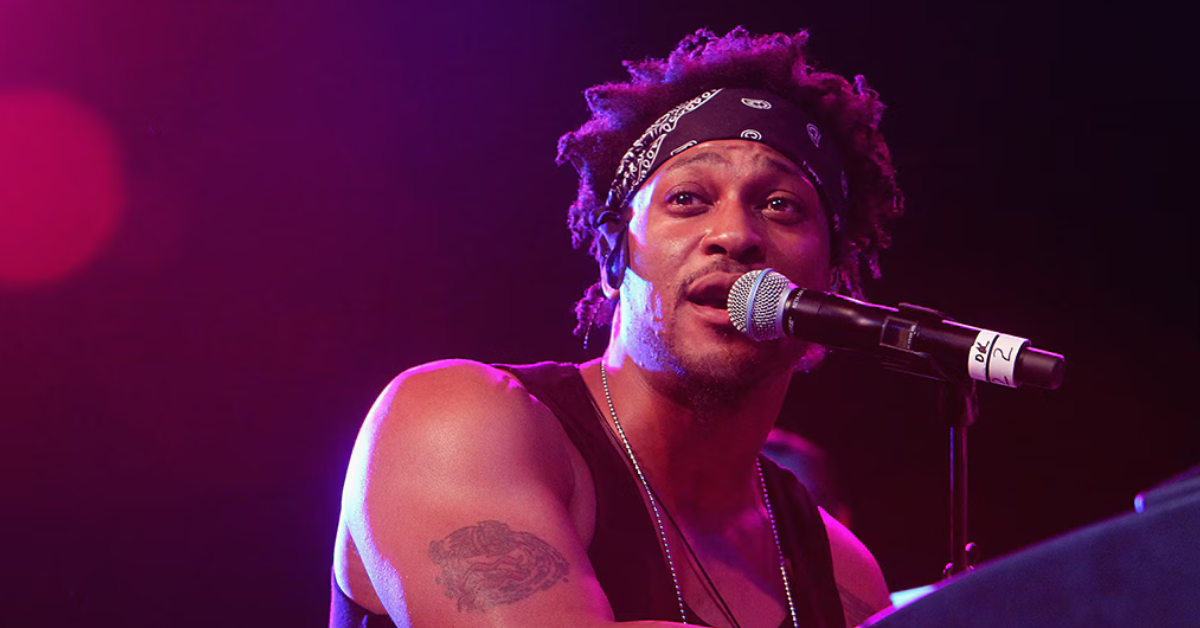
On October 14, 2025, the world lost one of its purest musical spirits. Michael “D’Angelo” Archer, the Grammy-winning architect of neo-soul, passed away at just 51 years old after a private battle with pancreatic cancer.1 His family’s statement called him “the shining star of our family,” a sentiment echoed by fans across generations who grew up on Brown Sugar and Voodoo.1
Born in Richmond, Virginia, D’Angelo reshaped the sound of modern soul, blending gospel’s depth, funk’s pulse, and hip-hop’s edge into something spiritual. When his breakout single “Untitled (How Does It Feel)” stopped time on TV screens, it didn’t just redefine R&B—it redefined vulnerability and Black male artistry.
Now, his passing joins a devastating roll call of Black men in music gone far too soon: DMX (50), Coolio (59), MF Doom (49), Craig Mack (47), Nate Dogg (41), Prodigy (42), Shock G (57), Black Rob (51), Irv Gotti (54), DJ Mister Cee (57), Rico Wade (52), Trugoy the Dove (54), Phife Dawg (45), Biz Markie (57)—and now, D’Angelo.
Each name represents brilliance. Together, they reflect a larger truth: Black men in America are dying too young, and too often, from conditions that thrive in silence.2
What Pancreatic Cancer Is and Why It’s So Deadly
The pancreas sits deep in the abdomen, quietly doing two critical jobs: producing insulin to regulate blood sugar and releasing enzymes that help digest food.3 When cancer forms there, it often grows undetected. By the time symptoms such as abdominal pain, weight loss, jaundice, or fatigue appear, the condition is usually advanced.4
Pancreatic cancer is called a “silent killer” because it rarely announces itself early. Globally, it’s responsible for nearly 500,000 deaths a year, ranking among the top five causes of cancer-related deaths worldwide.5 In the United States alone, it claims about 60,000 lives annually,5 and survival rates are devastating, with only about 13% of people diagnosed with pancreatic cancer living beyond five years.6
Unlike more visible cancers, there’s no reliable screening test for the general population.7 That’s why awareness, family history, and routine care are so crucial, especially for those at higher risk.
Why Our Communities Face Greater Risk
For Black Americans, the odds are even grimmer. Studies show that Black adults are 30% more likely to develop pancreatic cancer than white adults and more likely to be diagnosed at later stages.8 Mortality rates remain the highest of any racial group.8
Several factors drive this inequity:
- Delayed diagnosis. Limited access to specialists, mistrust of the medical system, and under-referral for imaging often mean tumors are discovered too late.8
- Chronic condition burden. Higher rates of diabetes, obesity, and chronic pancreatitis, conditions that strain the pancreas, lead to an increased risk of developing pancreatic cancer.8
- Environmental and social factors. Food deserts, limited preventive care, and chronic stress tied to systemic racism all contribute to inflammation and metabolic disease.8
A Pattern We Can No Longer Ignore
The loss of D’Angelo and so many Black men before him paints a sobering picture of health inequity within our culture’s brightest spaces.
Behind the beats, bars, and brilliance is a quiet but heartbreaking epidemic: heart disease, high blood pressure, diabetes, kidney failure, and now cancers.2 These conditions often go unchecked until it’s too late, silently cutting years off the lives of Black men across the country.2
Black men still have the lowest life expectancy of any demographic in the United States.2 And while poverty and policy play major roles, so do silence, stigma, and the cultural script that tells men to “push through” instead of “get checked”.2
The question isn’t only why D’Angelo died so young, it’s why Black men keep having to.
What We Can Learn, and Do, Right Now
1. Know the Warning Signs
Persistent abdominal or back pain, unexplained weight loss, yellowing of the eyes or skin (jaundice), dark urine, or new-onset diabetes in midlife can all signal pancreatic problems.4 If these symptoms appear, especially with a family history of cancer, see a doctor immediately.9
2.Track Your Family History
Pancreatic cancer risk doubles if a parent or sibling has had it.9 Share that information with your provider; genetic counseling and screening may be recommended.9
3. Manage What You Can Control
Quit smoking, limit alcohol, maintain a healthy weight, and manage diabetes and blood pressure.9 These everyday habits protect not just the pancreas, but the entire body.9
4. Get Routine Care Even When You Feel Fine
Regular checkups save lives. Ask your doctor to evaluate your metabolic health, including blood sugar, cholesterol, and blood pressure, and discuss any digestive symptoms you may be experiencing.9
5. Break the Silence
Talk about health in your circles. Make checkups as common a conversation as sports or music. Challenge the myth of invincibility that keeps too many brothers from seeking care until it’s too late.
Honoring a Legacy Through Action
D’Angelo’s music reminded us that soul lives in vulnerability. Now, his passing reminds us that wellness does too.
As we mourn his voice, we must also amplify another: our collective call to protect Black men’s health. Awareness isn’t enough; it’s time for action: more research funding for cancers that disproportionately affect us, more culturally competent care, more trust-building between providers and communities.
Music gave us connection. Health gives us time. Let’s make sure Black men get to have both.
References
- Jones, O. (2025, October 14). D’Angelo, Neo-Soul Pioneer And Grammy Award-Winning Musician, Dead At 51. Retrieved from ESSENCE : https://www.essence.com/entertainment/dangelo-neo-soul-pioneer-dead-at-51/
- Gilbert, K. L., Ray, R., Siddiqi, A., Shetty, S., Baker, E. A., Elder, K., & Griffith, D. M. (2016). Visible and Invisible Trends in Black Men’s Health: Pitfalls and Promises for Addressing Racial, Ethnic, and Gender Inequities in Health. Annual Review of Public Health. doi:10.1146/annurev-publhealth-032315-021556
- ACS. (2024, February 5). What Is Pancreatic Cancer? Retrieved from American Cancer Society: https://www.cancer.org/cancer/types/pancreatic-cancer/about/what-is-pancreatic-cancer.html
- ACS. (2024, February 5). Signs and Symptoms of Pancreatic Cancer. Retrieved from American Cancer Society: https://www.cancer.org/cancer/types/pancreatic-cancer/detection-diagnosis-staging/signs-and-symptoms.html
- World Cancer Research Fund. (2025). Pancreatic cancer statistics. Retrieved from World Cancer Research Fund: https://www.wcrf.org/preventing-cancer/cancer-statistics/pancreatic-cancer-statistics/
- ACS. (2025, January 16). Survival Rates for Pancreatic Cancer. Retrieved from American Cancer Society: https://www.cancer.org/cancer/types/pancreatic-cancer/detection-diagnosis-staging/survival-rates.html
- PanCAN. (2025). Pancreatic Cancer Early Detection. Retrieved from The Pancreatic Cancer Action Network: https://pancan.org/facing-pancreatic-cancer/diagnosis/early-detection/
- Scarton, L., Yoon, S., Oh, S., Agyare, E., Trevino, J., Han, B., Setiawan, V. W. (2018). Pancreatic Cancer Related Health Disparities: A Commentary. Cancers (Basel). doi:10.3390/cancers10070235
- Klein, A. P. (2021). Pancreatic cancer epidemiology: understanding the role of lifestyle and inherited risk factors. Nature Reviews Gastroenterology & Hepatology. doi:10.1038/s41575-021-00457-x